
Two centuries after Drais
Karl von Drais invented the bicycle’s precursor in Mannheim in 1817. Today Germany plans climate-neutral transport around that invention – not as a niche lifestyle, but as infrastructure.
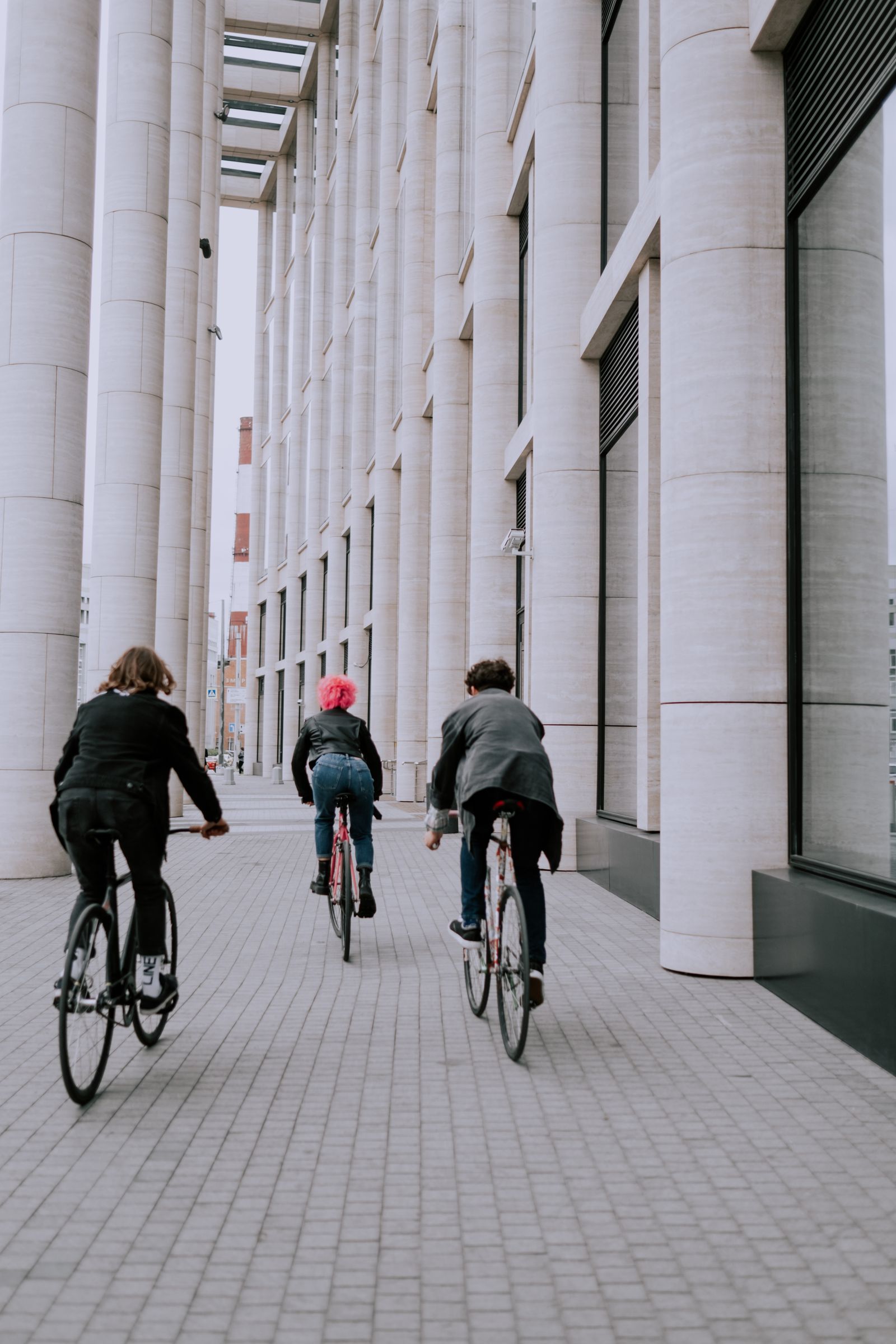
Children take a police-supervised cycling test in fourth grade. The ADFC’s Fahrradklima-Test grades cities every two years. Bankers in suits and grandparents with panniers share the same green lanes.
Cities that set the pace
Germany’s bicycle capitals prove that dense cities can move on two wheels when politics and asphalt align.
Münster
The bicycle capital
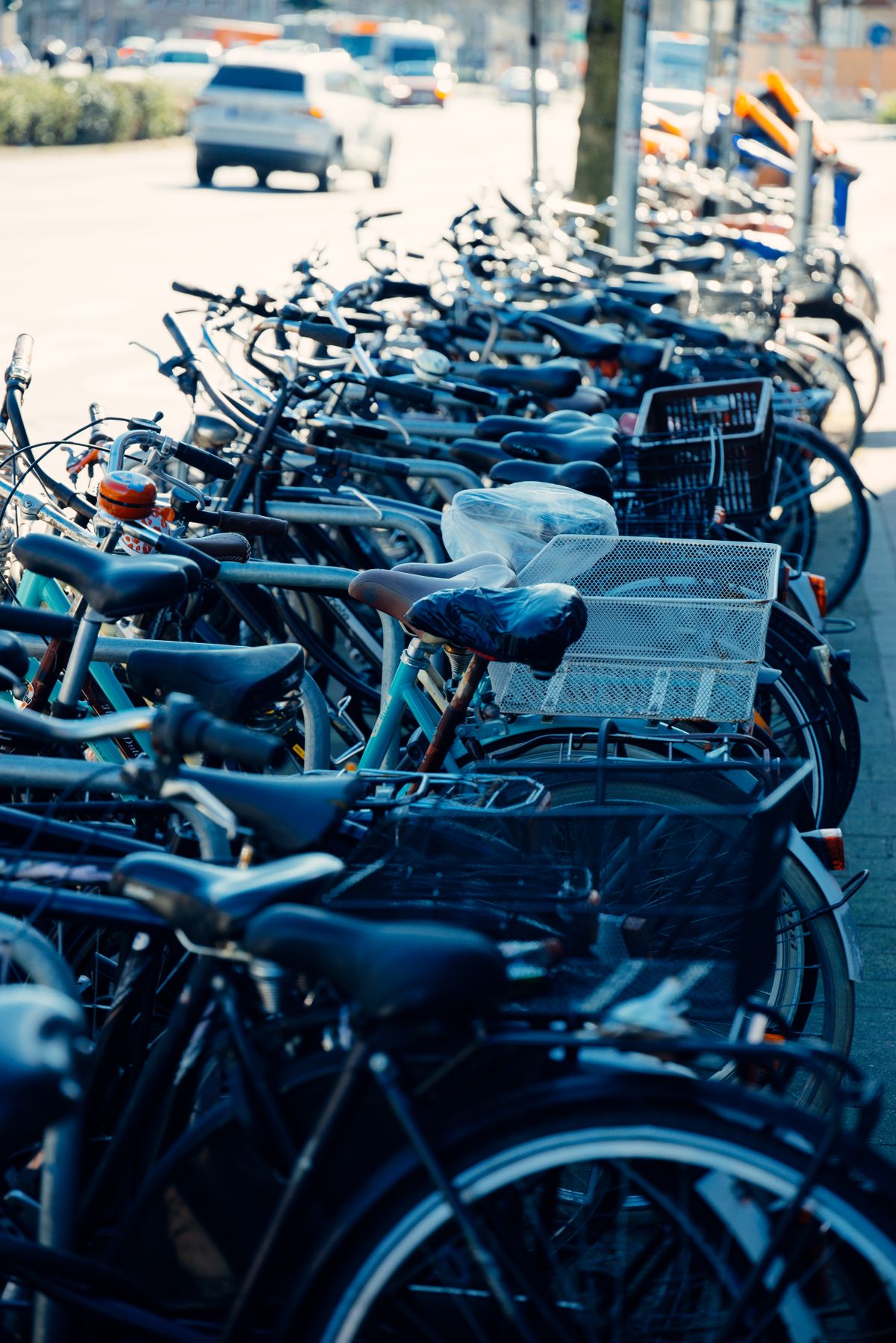
Roughly every second trip in the old town is by bike. The car-free Promenade ring and a multi-storey station bike garage with thousands of spaces are legendary.
Freiburg
The green pioneer
Districts like Vauban were planned around cycling and transit. Over 400 km of cycle routes serve a city of just 230,000.
Bremen & Karlsruhe
Flat cities, high shares
Bremen hits ~25% bike mode share; Karlsruhe pairs cycle streets with one of Germany’s best bike-and-tram systems.
Berlin
The transforming capital
The 2018 Mobility Act committed to protected lanes on main roads. Green-painted Pop-up and permanent lanes are reshaping the city – including the eastern districts where our team is based.
Infrastructure with a name
Classic Radwege run beside roads. Fahrradstraßen give cyclists priority. 30 km/h zones calm residential streets. And Radschnellwege – bicycle highways – connect cities at commuting scale.
The Ruhr’s RS1 is planned at roughly 100 km from Duisburg to Hamm: wide, lit, intersection-light. The federal National Cycling Plan 3.0 funds this expansion through 2030.
D-Netz: 12 national routes stitching the country together
Everyday bike culture
Equipment is not optional
Lights, reflectors, two brakes and a bell are required by StVZO. That is why German city bikes leave the shop “complete”.
Cargo bikes replace second cars
Germany is Europe’s biggest cargo-bike market. Local grants and employer leasing schemes fuel the boom.
Industry & tourism
Eurobike, world-leading e-bike motors, Bett+Bike lodgings and regional trains that carry bikes – the ecosystem is deep.